

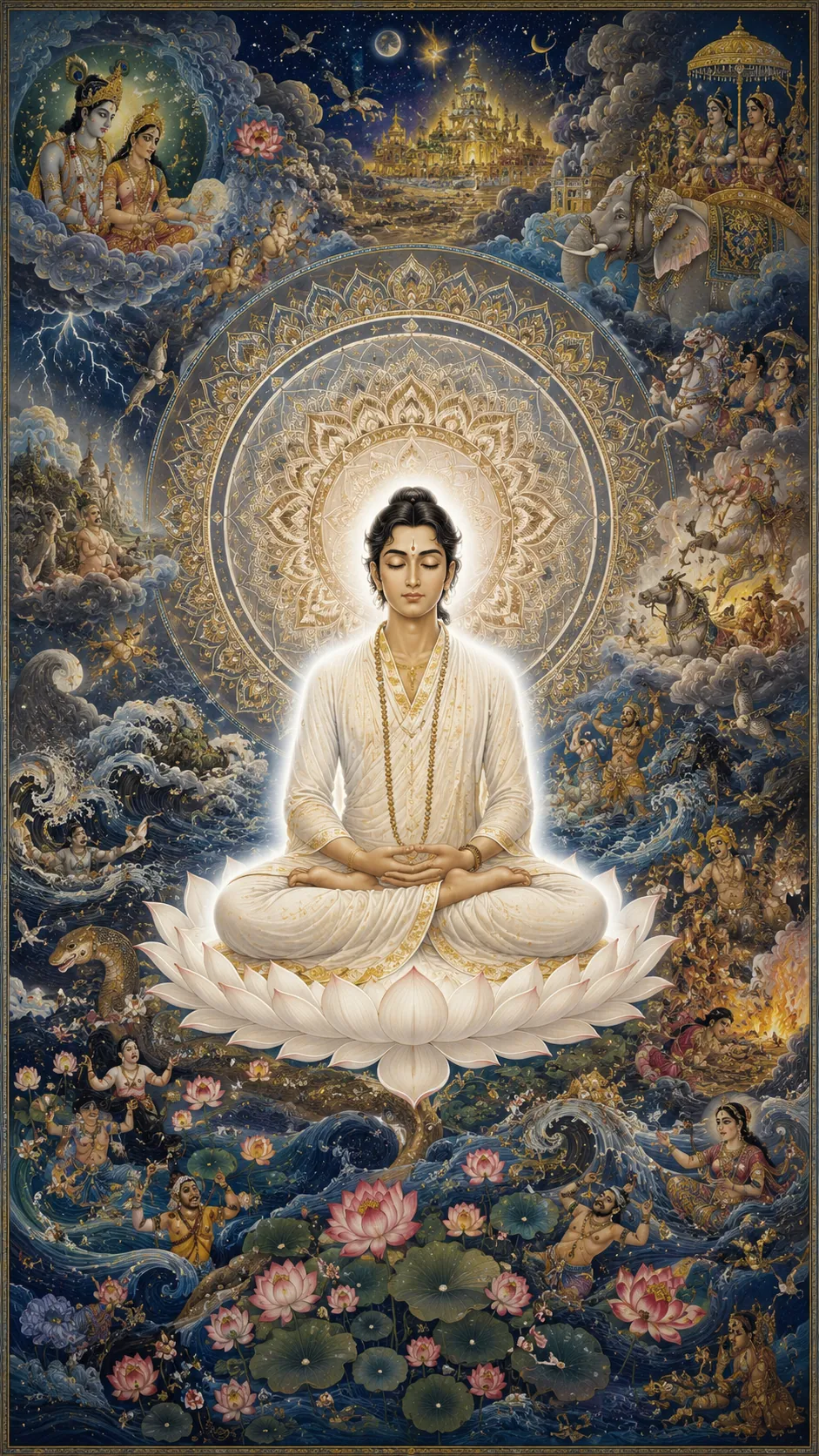
Mystic
The Upanishads, the Ashtavakra Gita and the symbols behind them: what the sages meant when they spoke of the self.
ॐ नमो भगवते वासुदेवाय
HarshTattva explores temples, Vedic rituals, sacred stories and Upanishadic philosophy through carefully researched articles, paintings and short films.
4.7k+ followers and 200k+ monthly views on Instagram
Every article on HarshTattva starts with a question, follows it through the texts and traditions, and ends with what it means today.
The Upanishads, the Ashtavakra Gita and the symbols behind them: what the sages meant when they spoke of the self.
Shiva, Vishnu, Shakti and the great sages: stories retold with their sources, their symbols and their context.
Temples, yagnas and rituals explained clearly: what is done, why it is done, and what it does for us now.
The Ashtavakra Gita is a conversation between a young sage and a king about freedom and self-knowledge. Drag or scroll through the series.
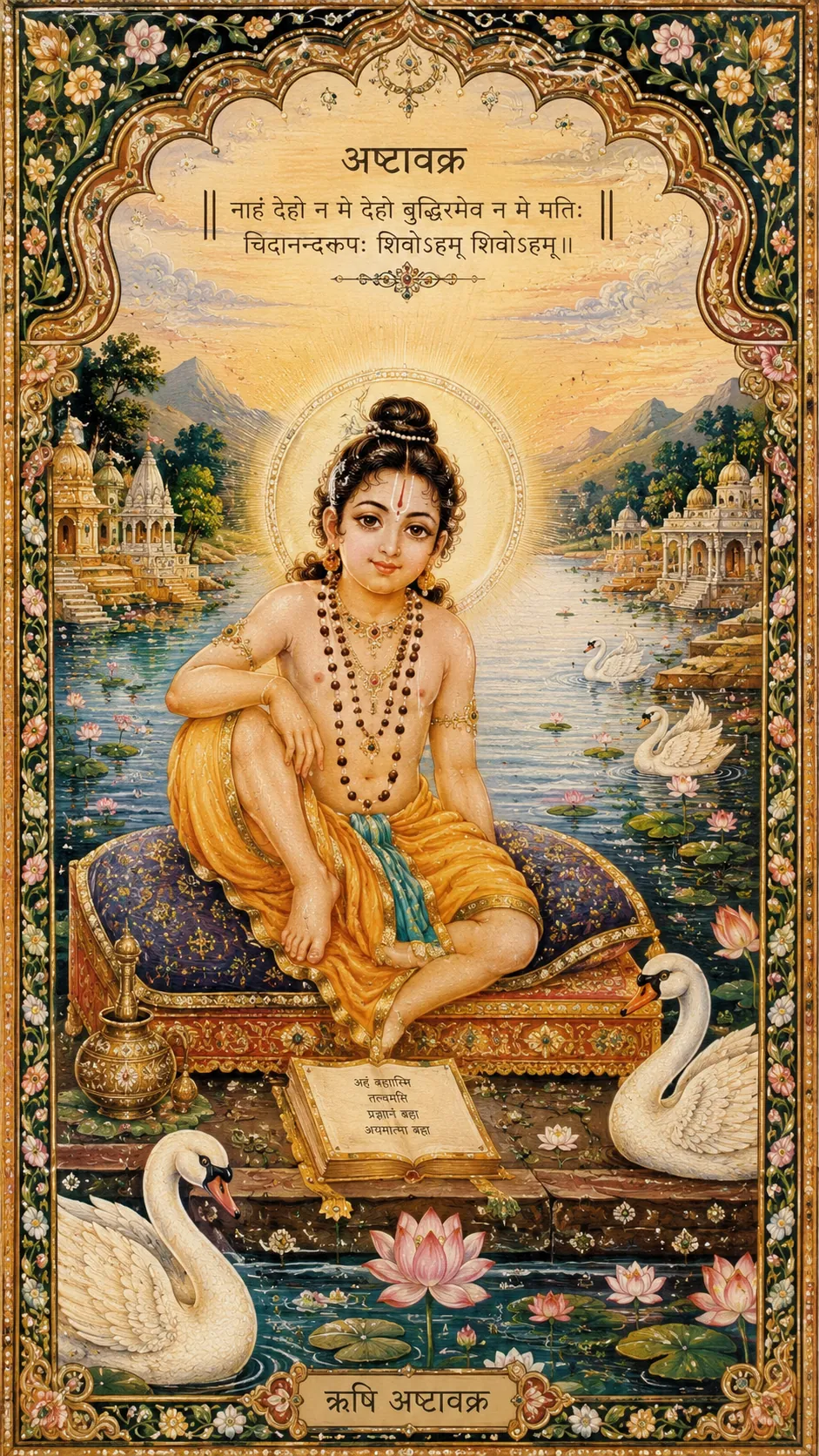
Ashtavakra, whose name means eight bends, is remembered for wisdom far beyond his years.
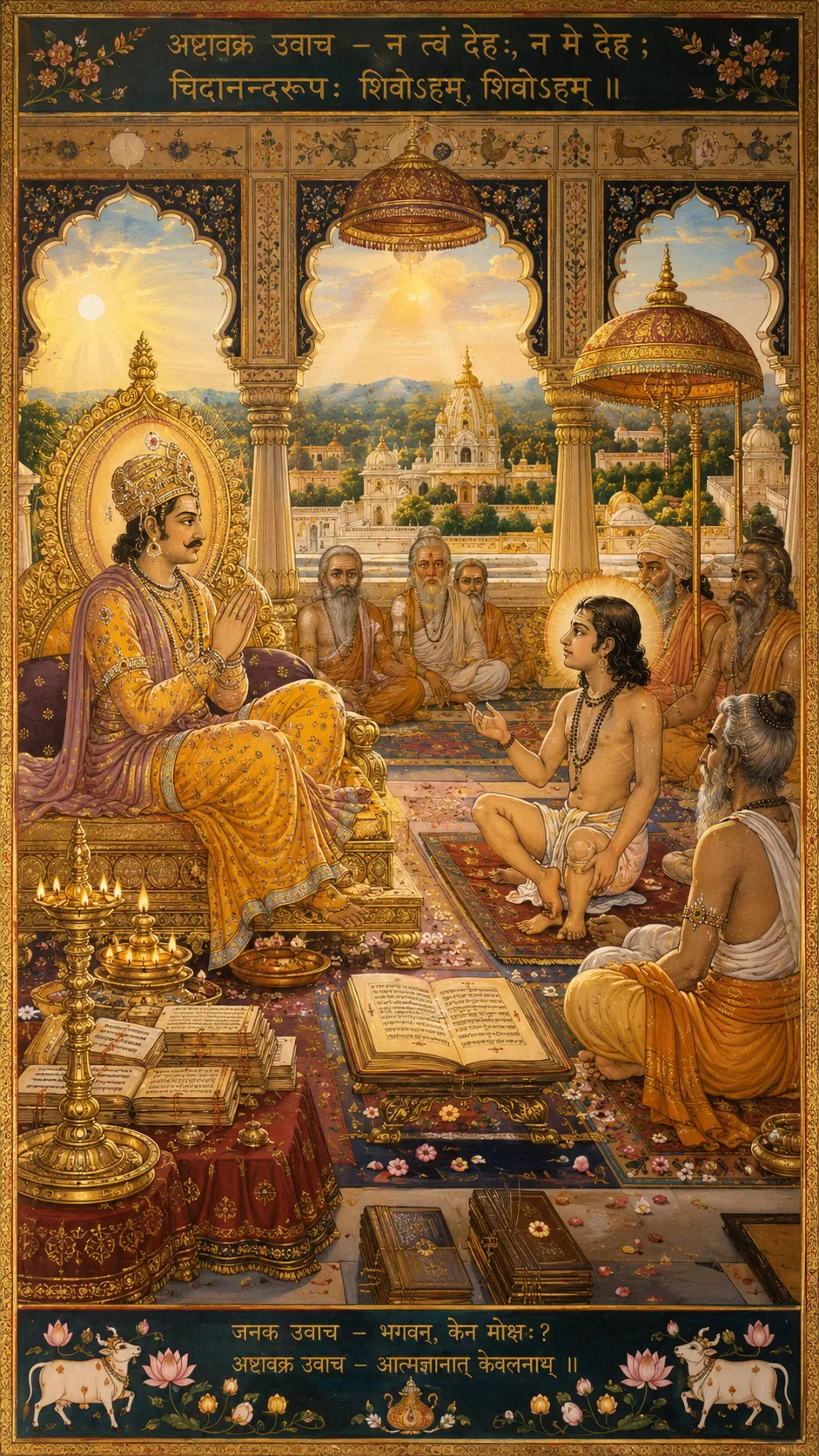
The king asks how liberation is found, and the child answers without ceremony.
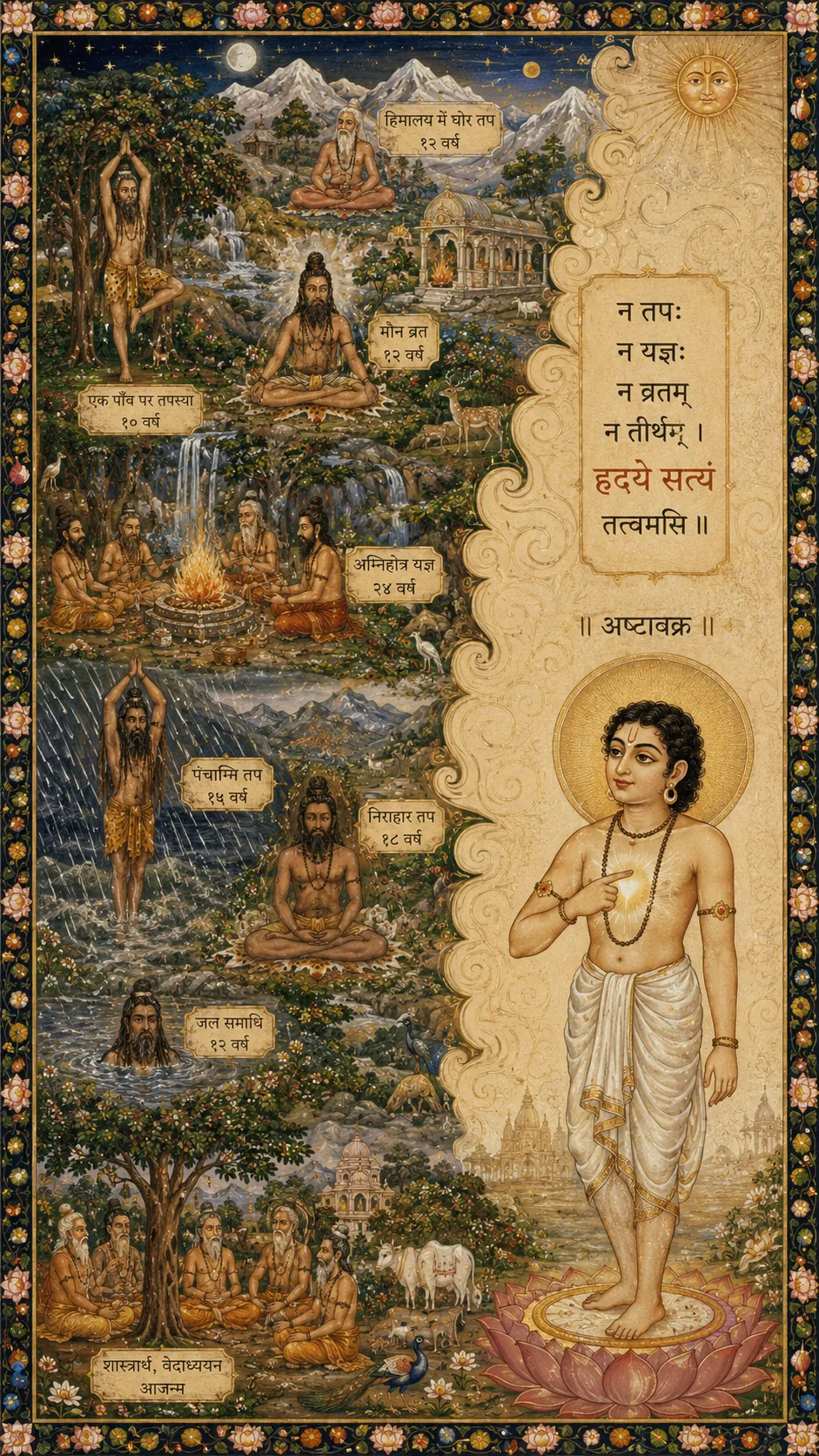
Years of penance and ritual, set beside the idea that truth is already within.
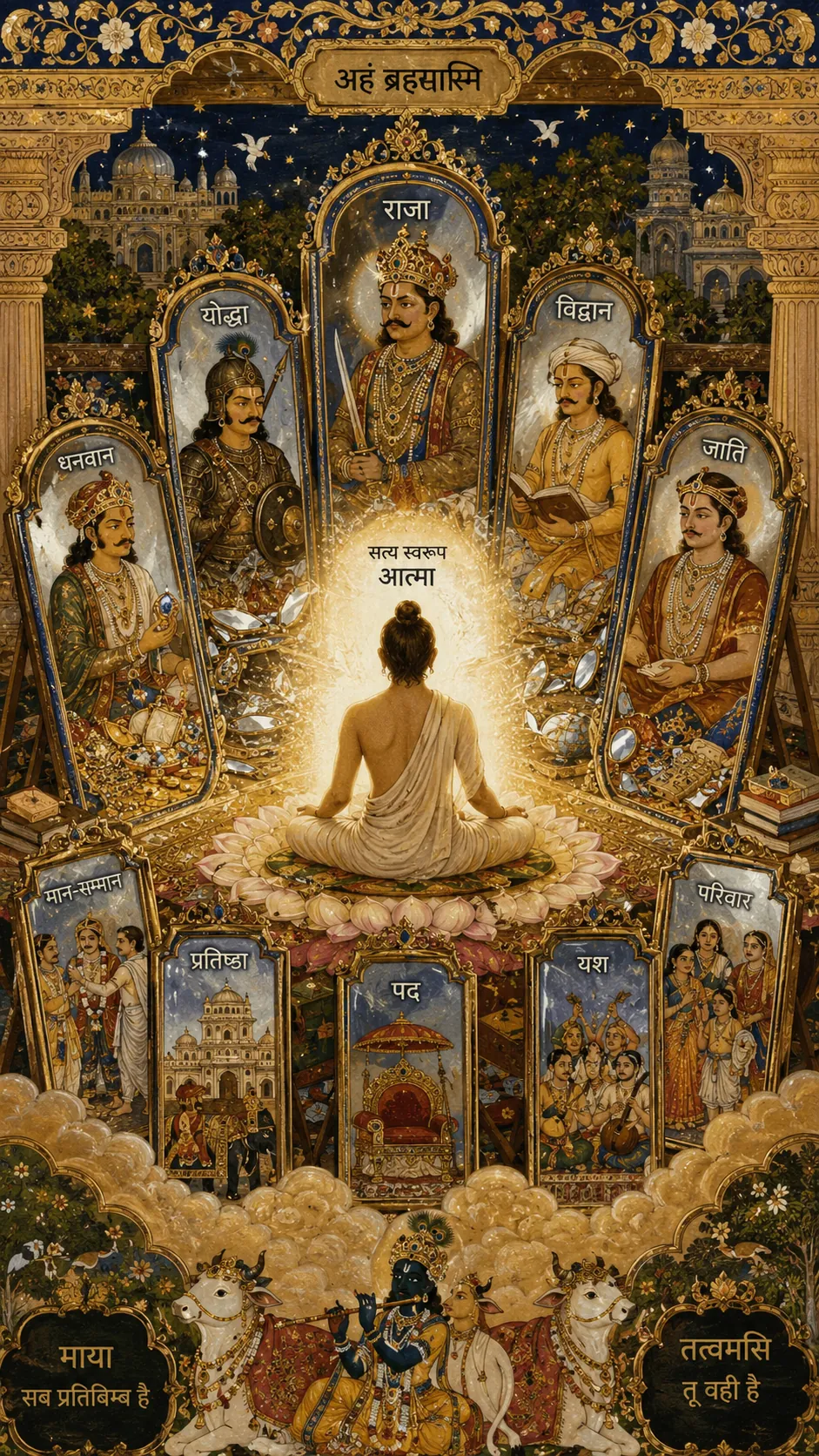
King, warrior, scholar, family: every role is a reflection, and none of them is the one looking.
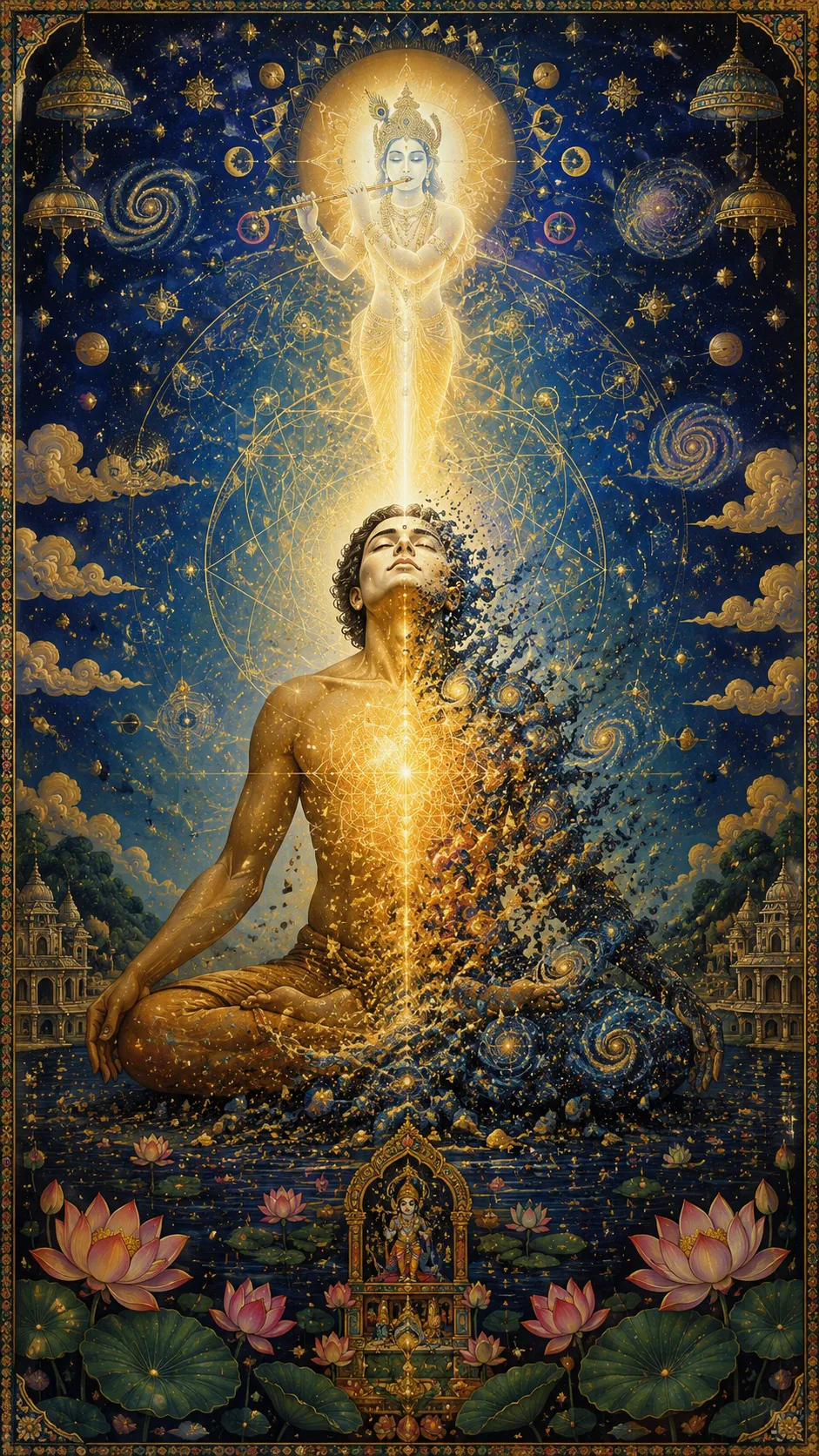
When body and mind are seen as passing, what remains is vast and quiet.
The world keeps moving. The one who watches it does not have to.
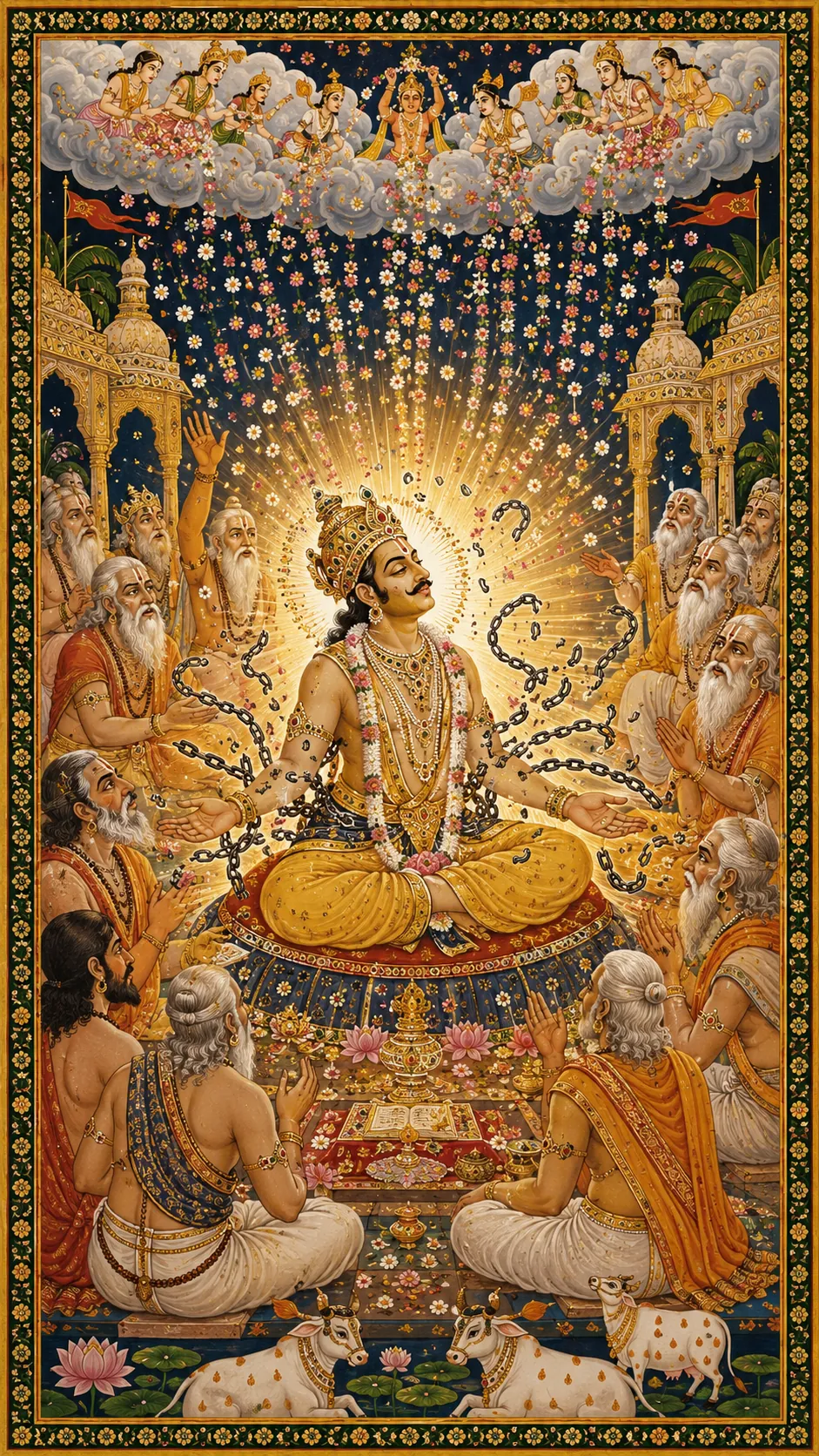
Janaka's moment of release, as sages watch and flowers rain down.
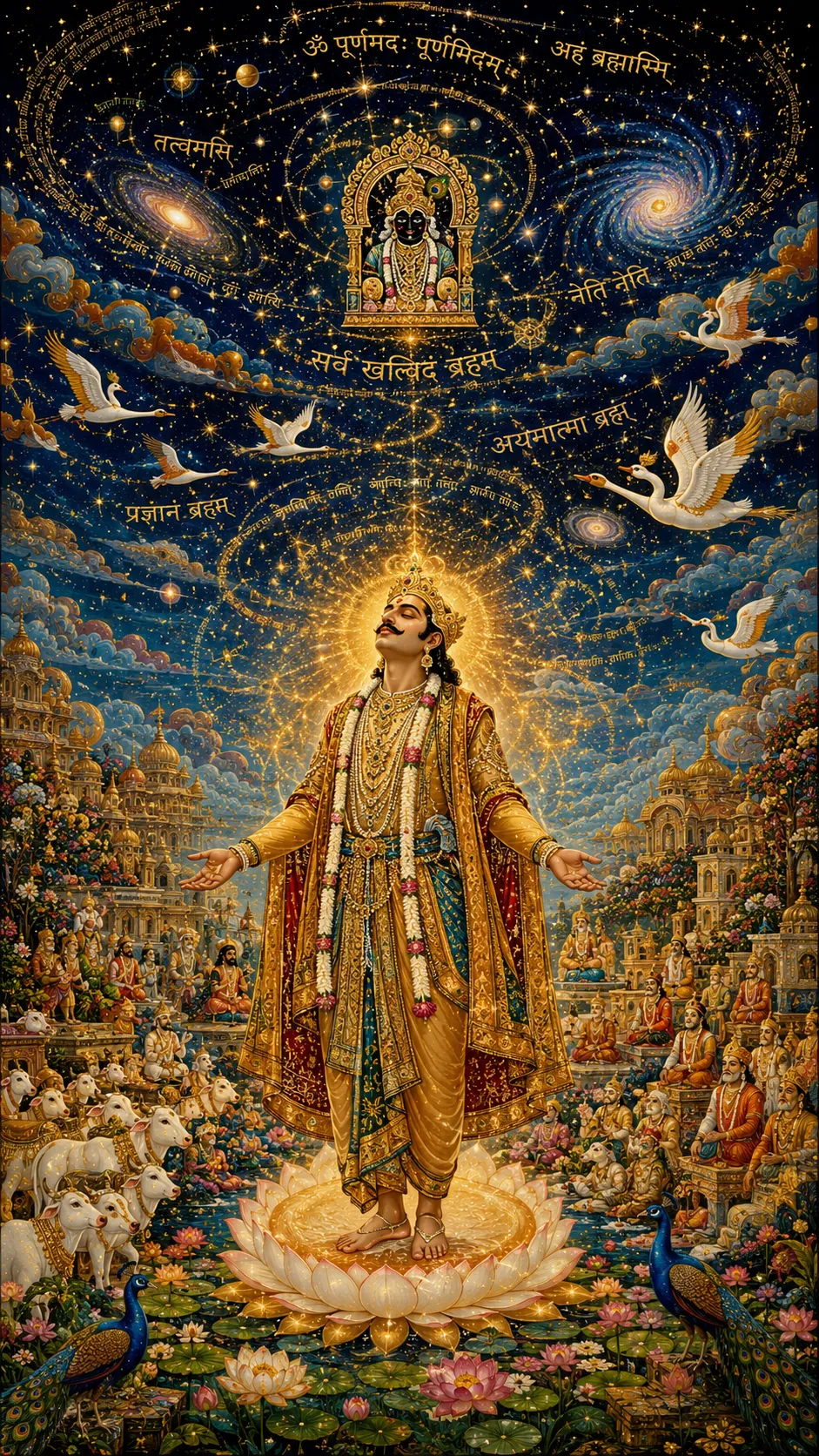
The king sees one reality in every person, creature and star.
Temples, rituals and sacred texts, explained in plain language with the history behind them.
View all articlesThe meaning, symbolism and modern relevance of the eight manifestations who guard the eight directions.
Somayajna, Ashvamedha, Rajasuya and more, and how Vedic fire rituals connect to practice today.
Geometry, materials and cosmic ideas gathered in one of Hinduism's most recognisable symbols.
A Shakti Peetha on a hilltop in Gujarat, and the stories that pilgrims carry up the steps.
Tulsidas's forty-verse hymn, its origins, key verses and how to bring it into daily life.
Why we retell sacred stories, and how we keep them faithful and relevant.
Four steps we follow in every piece of writing, and the path we hope you take through the site.
Meet a temple, a ritual, a verse or a character you have heard of but never looked into.
Follow the story back to the texts and traditions it comes from, with context instead of rumour.
See the symbol behind the story and why generations kept telling it.
Carry one idea into your day. That is where reading turns into practice.
तत्त्वमसि · That thou art
The sacred is not far away. Every myth, temple and ritual we research points back to one question: not what the gods look like, but who is looking. That is what tattva means.

संस्थापक, हर्षतत्व
Harsh started HarshTattva to make sacred stories easier to find and easier to trust. As a content strategist and designer, he builds each piece like a short essay: a clear question, a sourced answer and a design that lets the story breathe.
What began as a single Instagram page now reaches a growing community of readers who want depth rather than noise.
New here? These are the things readers ask most.
HarshTattva is a research-led publication on Hindu mythology, sacred temples, Vedic rituals and Upanishadic philosophy. We publish articles on harshtattva.in and short-form stories on Instagram and YouTube.
The Ashta Bhairava, types of yagnas, the symbolism of the Shivling, the Mahakali Temple at Pavagadh, the Hanuman Chalisa and the teachings of the Ashtavakra Gita, with new subjects added regularly.
HarshTattva was founded by Harsh Suthar, a content strategist and designer, who has grown it from scratch into a community of thousands of readers.
Tattva is a Sanskrit word for essence or underlying reality. The name combines the founder's name with that idea: finding the essence behind sacred stories.
Follow @harshtattva on Instagram, subscribe on YouTube, or connect on LinkedIn. New articles appear at harshtattva.in/blogs.

